.jpg?branch=production)
The U.S. said it carried out “self-defense” strikes against Iran over the weekend, while Tehran on Monday said it had targeted an air base used in the attack amid continued talks to end the war.
U.S. Central Command relayed late Sunday night that it had conducted “self-defense strikes on Iranian radar and command and control sites for drones” in Goruk, southern Iran, and Qeshm Island.
The strikes were “in response to aggressive Iranian actions that included the shootdown of a U.S. MQ-1 drone that was operating over international waters,” according to CENTCOM, who vowed to continue “to protect U.S. assets and interests in response to unwarranted Iranian aggression” during the ongoing, albeit increasingly fragile, cease-fire.
The Iranian Revolutionary Guard Corps (IRGC) on Monday morning said it had responded to the U.S. strikes by targeting “the air base from which the attack originated, and the planned targets were destroyed,” according to a statement carried by semi-official Iranian news agency Tasnim.
While Iran did not specify which air base was targeted, Kuwait’s army said it was confronting “hostile missile and drone attacks” and that it had activated air defense systems.
CENTCOM also confirmed that U.S. forces had “successfully intercepted two Iranian ballistic missiles targeting American forces based in Kuwait” and no American personnel had been harmed.
Kuwait houses a number of U.S. military installations. Its Ali Al Salem Air Base, which hosts the U.S. Air Force, was targeted by Iran early on in the war. Six U.S. soldiers were killed while stationed at Port Shuaiba, Kuwait, in March.
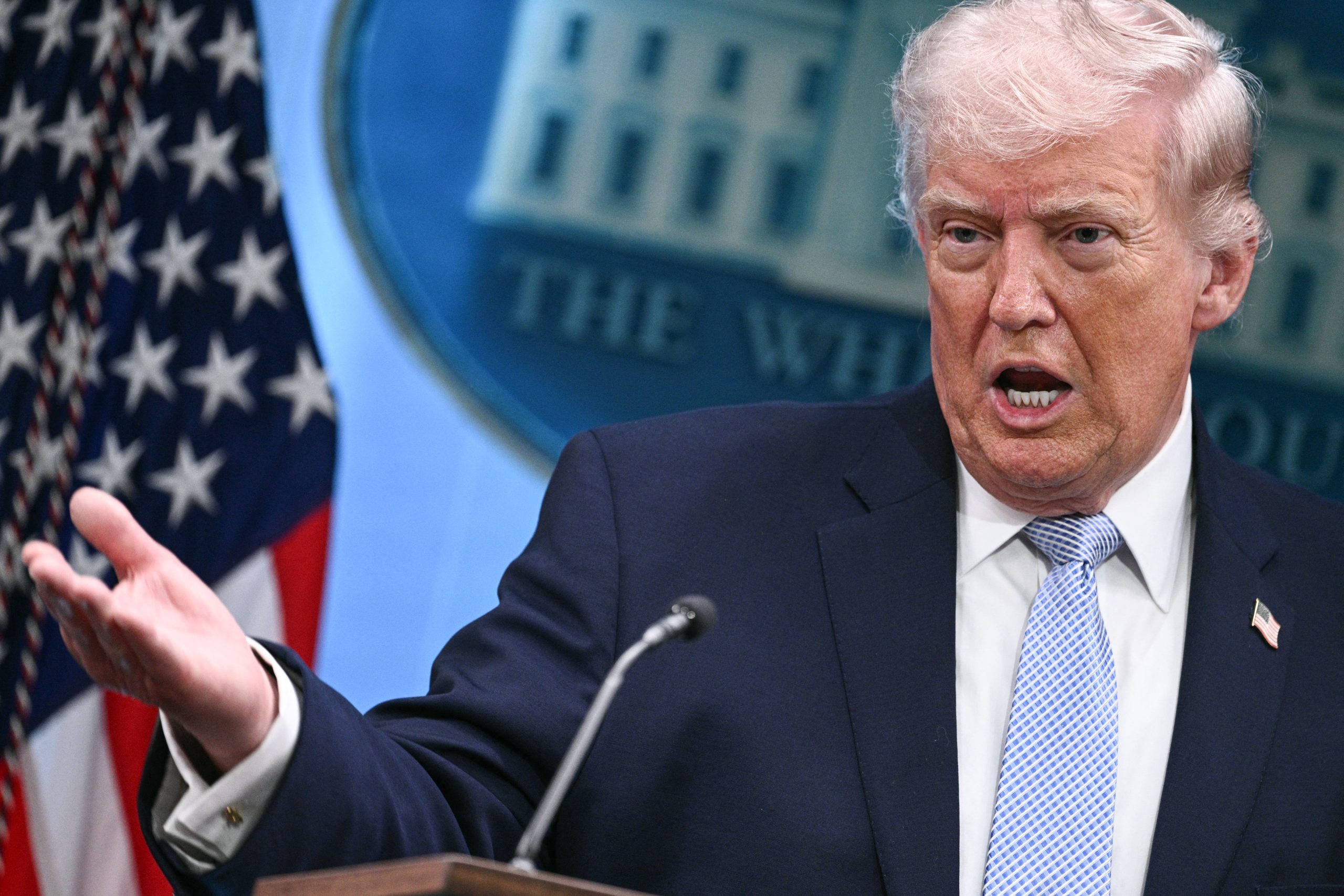
Amid the latest exchange of fire, President Donald Trump pushed back at those seemingly questioning the pace of the U.S.-Iran peace deal talks which are stretching on.
“Iran really wants to make a deal, and it will be a good one for the U.S.A. and those that are with us,” argued Trump, who has reportedly sent back changes to a proposed deal intended to extend the cease-fire and reopen the Strait of Hormuz.
Trump accused Democrats and some “seemingly unpatriotic Republicans” of “negatively chirping” amid the negotiations, telling them to: “Just sit back and relax. It will all work out well in the end—it always does.”
Oil and gas prices rise as U.S. and Iran trade strikes
Oil prices saw a spike on Monday morning following the renewed exchange in strikes.
The price of Brent crude oil jumped by around 3% on Monday to $94.4 per barrel, up from just over $91.6 per barrel at closing time on Friday.
The cost of U.S. natural gas also briefly jumped to $3.39 per MMBtu on Monday from $3.27 at the close of Friday, according to Trading Economics.
Iran’s continued choke hold over the Strait of Hormuz, a crucial waterway through which around a fifth of global oil production flows, has caused major market instability and prompted a global energy crisis.
The impact has been felt for months at the pump in the U.S., with gasoline prices at a national average of $4.32 per gallon as of Monday, up from $2.98 before the conflict, according to the American Automobile Association.
What is the status of the U.S.-Iran peace deal?
The ongoing cease-fire between the U.S. and Iran has been accompanied by slow progress towards a possible peace deal.
But key disagreements—especially over Tehran’s nuclear capabilities and the future management of the Strait of Hormuz—have meant the two sides remain at a relative impasse.
The cease-fire is fragile “because there’s a realization dawning on both sides that they’re not going to get what they want out of the agreement,” Andrew Gawthorpe, senior research fellow at the Foreign Policy Centre, tells TIME.
During a press briefing on Monday, Esmaeil Baghaei, the Iranian Foreign Ministry spokesman, claimed that the U.S. “continuously changes its views and raises new or contradictory demands” and said the talks are taking place against a backdrop of “deep suspicion and mistrust.”
Baghaei also reaffirmed Iran’s stance that any deal with the U.S. must include guarantees for an end to the Israel-Hezbollah hostilities in Lebanon.
Tasnim news agency later reported that due to continued Israeli strikes in Lebanon, the Iranian negotiation team is set to stop “talks and the exchange of texts through intermediaries” with the U.S.
Israeli officials and Hezbollah have repeatedly accused each other of breaking the Israel-Lebanon cease-fire.
Tasnim added that Tehran will also consider a full closure of the Strait of Hormuz
Trump last week doubled down on the U.S.’ demand that the Strait be opened immediately, with no tolls posed to transiting ships, and that Iran must remove or detonate any remaining sea mines laid along the vital passage.
“From the perspective of traditional American foreign policy, Iran’s control over the Strait of Hormuz is absolutely non-negotiable,” Gawthorpe tells TIME.
It could be that Washington has to relent on other items, he suggests, such as the relief of sanctions on Iran or the unfreezing of Iranian assets, in exchange for Tehran relinquishing management of the Strait.
Trump has also repeatedly reaffirmed the U.S.’ stance that Iran can never be allowed to have a nuclear weapon.
He said the “nuclear dust” remaining from the U.S. strikes against three key Iranian nuclear facilities last year must be “unearthed by the United States” and destroyed, in close coordination and conjunction with the Islamic Republic of Iran and the International Atomic Energy Agency.
“Other items, of far less importance, have been agreed to,” claimed the President.