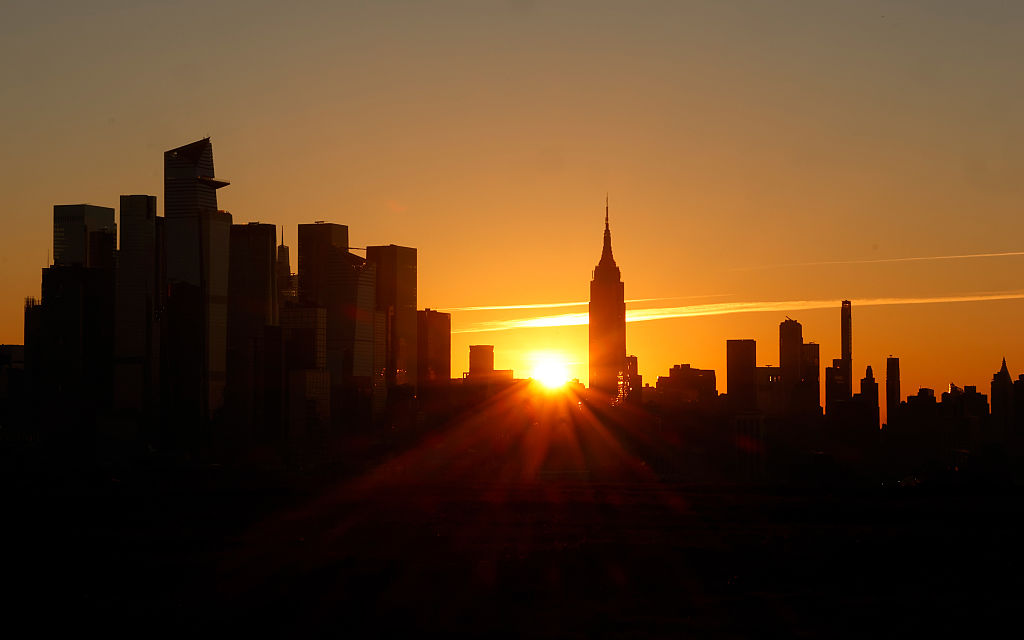
Winter sunrises and sunsets may come notably later in much of the country soon, if Congress ends up passing a controversial bill to make Daylight Saving Time permanent.
On Tuesday, the Sunshine Protection Act passed the House in a 308-171 vote. The bill, which has received the backing of President Donald Trump, is part of a yearslong effort to end the biannual clock change that the majority of the U.S. has observed for decades. The measure now heads to the Senate, where its future is uncertain.
Currently, most U.S. states change their clocks twice a year, jumping forward an hour in March for Daylight Saving Time and then falling back an hour in November for Standard Time. Only Hawaii and most of Arizona choose to forgo the practice, and instead remain in Standard Time year-round.
Read More: The States That Don’t Observe Daylight Saving Time—and the Ones Trying to Stay in It Permanently
But states are not allowed to make Daylight Saving Time permanent. The Sunshine Protection Act, should it pass the Senate and be signed into law by the President, would change that, establishing Daylight Saving Time year-round across the country, unless states choose to opt out of it.
Supporters of making Daylight Saving Time permanent have noted that the biannual clock change is unpopular among Americans, and argued that year-round Daylight Saving Time would promote more outdoor activity, as well as reduce traffic accidents and lower crime.
Many sleep experts have objected to the Sunshine Protection Act, however, arguing that permanent Standard Time would best align with people’s circadian rhythms and be better for overall health and safety.
Year-round Daylight Saving Time would mean that the sun would appear to rise an hour later in the morning in the winter and set an hour later in the evening. What exactly that would look like, though, would vary depending on where you live, as the westernmost parts of some time zones already experience sunrises and sunsets an hour—or even longer—after the easternmost parts.
Residents of Miami would see the sunrise a little after 8 a.m. local time on Jan. 15, while the sunset would be just before 7 p.m. local time, according to AccuWeather. Similarly, New Yorkers would see their sunrise jump forward on Jan. 15 from about 7:18 a.m. to 8:17 a.m. local time—and, in return, would see an extra hour of daylight in the evening, with the sun appearing to set shortly before 6 p.m. local time, rather than just before 5 p.m.
Other cities, meanwhile, would see an even later sunrise. In Dallas, the sunrise on Jan. 15 would be around 8:30 a.m. local time, while the sunset would be shortly after 6:40 p.m. local time, according to AccuWeather. In Indianapolis, locals wouldn’t see the sun until after 9 a.m. their time on Jan. 15, AccuWeather predicted.
And in Juneau, Alaska, the latest sunrise for residents would be after 11 a.m. local time in the winter months, with a sunset of around 4:40 p.m. local time, according to Nexstar’s estimates.
This isn’t the first time the U.S. government has tried to make Daylight Saving Time year-round: in 1974, the country observed permanent Daylight Saving Time—but only for a few months. The change proved to be widely unpopular because people were getting up and going to work and school in the dark, since the sunrise didn’t occur until later in the morning, and the clock changes were soon reintroduced.