Two major incidents at chemical plants within the past week sent tens of thousands fleeing from their homes in California and left 11 people dead in Washington.
But despite a spate of similar incidents over the last year, the Trump Administration is planning to roll back federal regulations designed to prevent similar disasters. Experts and environmental groups have warned that such a move would make chemical accidents far more common.
Mass evacuations were ordered and a state of emergency declared when a tank containing nearly 7,000 gallons of highly toxic chemical methyl methacrylate became unstable at an aerospace plastics facility in Garden Grove, California, causing it to heat up and risk explosion.
Read More: The Conservative Case for Protecting the Environment
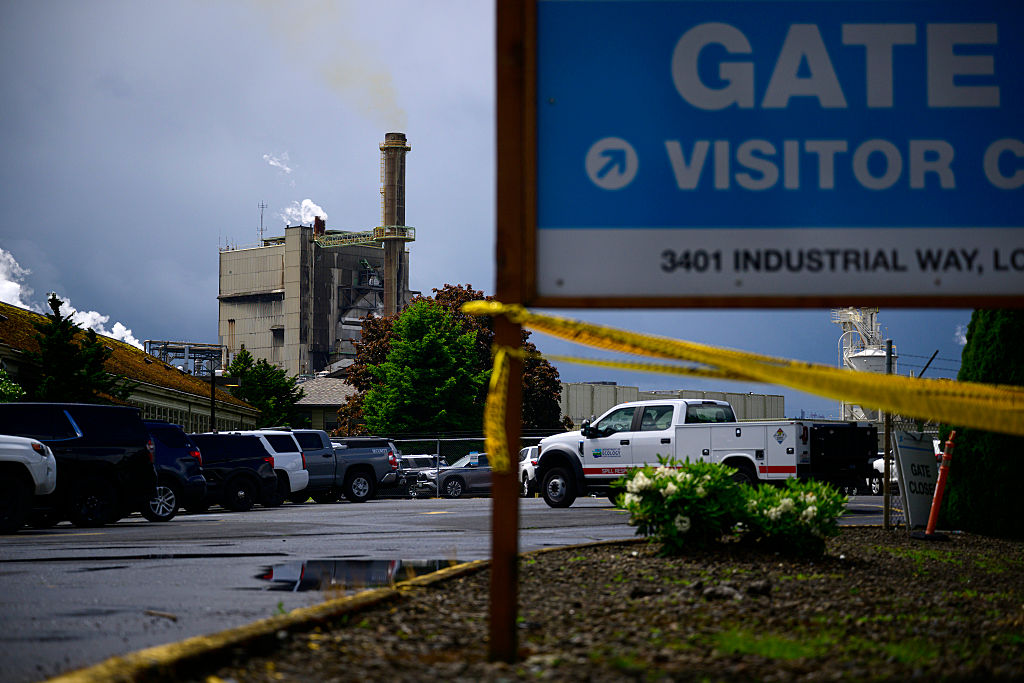
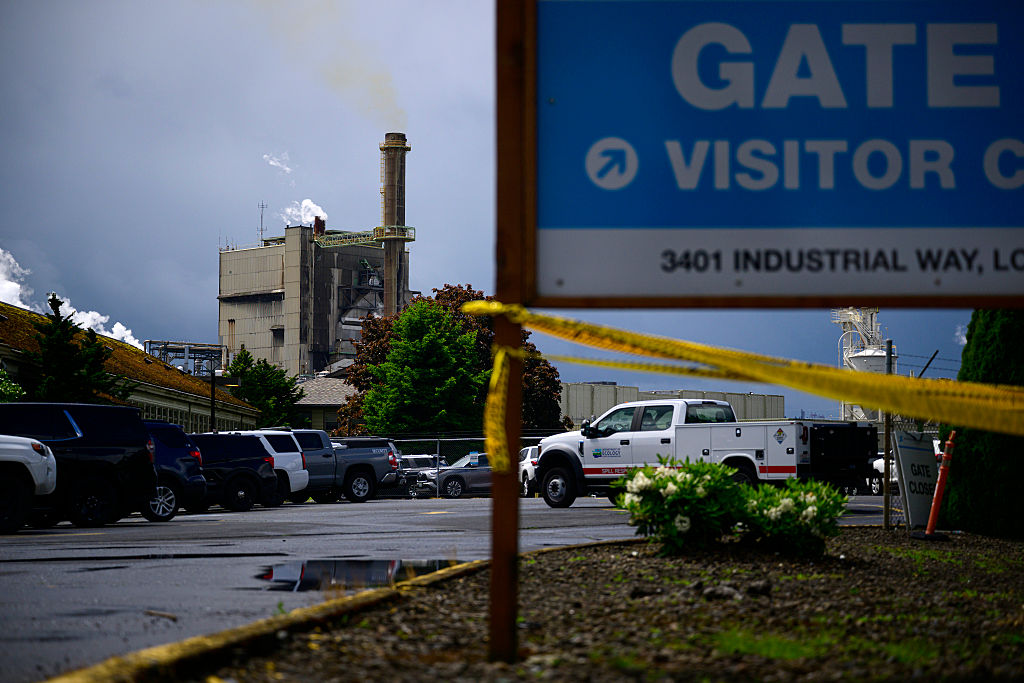
Just as those residents were cleared to return home on Tuesday morning, a 900,000-gallon tank containing a mixture of sodium hydroxide, sodium sulfide, and disodium carbonate, known as “white liquor,” imploded at a paper mill in Longview, Washington. It was one of the deadliest industrial accidents in the U.S. in years, and came not long after safety complaints were filed against Nippon Dynawave in March and May. The state’s labor and industries department said on X that they were about “various violations that weren’t related to chemical process or storage safety.”
The two incidents follow several other chemical plant disasters in the last year, including last month, when two workers died and another was critically injured after a chemical release at a plant in West Virginia.
According to the Coalition to Prevent Chemical Disasters—a group of environmental justice, labor, public health, national security, and environmental organizations—at least 215 dangerous chemical incidents occurred in 2025, including fires, explosions, and toxic releases. It says there have been at least 1,446 hazardous chemical incidents in the U.S. since 2021, an average of 5 incidents per week.
The incidents have drawn fresh scrutiny to plans by the Trump Administration to repeal regulations designed to prevent and investigate catastrophic industrial chemical releases, fires, and explosions.
“The fatal and shocking incidents communities have faced in recent days demonstrate the urgent need to implement and build on existing regulatory safeguards so communities near chemical facilities are protected from chemical disasters, the Coalition to Prevent Chemical Disasters said in a statement. “But, instead of protecting workers and families from death, injury, and illness, Trump’s [Environmental Protection Agency] is putting communities at greater risk of harm by weakening the nation’s primary defense against chemical facility incidents.”
The Trump Administration is trying to roll back regulations
The Environmental Protection Agency (EPA), which is led by Trump appointee Lee Zeldin and oversees the chemical industry, has sought to loosen reforms introduced in 2024 that were designed to “further protect vulnerable communities from chemical accidents, especially those living near facilities in industry sectors with high accident rates.” The 2024 Safer Communities by Chemical Accident Prevention (SCCAP) changes implemented by the Biden Administration included additional safeguards, third-party audits for facilities with prior accidents, and employee participation in facility accident prevention.
The EPA’s revisions would slash these safeguards and propose removing the agency’s rule that facilities should establish a process for employees to report unaddressed hazards. They would also eliminate the requirement for facilities to consider climate-related disasters such as floods when developing emergency plans.
If implemented, the changes would affect the approximately 12,000 facilities nationwide covered by the 2024 regulations.
Read more: Nearly Two Years Since the Disaster in East Palestine, Where Are Trump and Vance?
Environmental justice groups broadly condemned the Trump Administration’s proposed rollbacks when they were announced in February this year, arguing that the new proposal would increase the risk of catastrophic chemical accidents.
“Once again, we’re seeing the Trump Administration gamble with the health of entire communities, prioritizing the chemical industry’s profits, instead of doing its job to keep families safe from industrial chemical emergencies,” Emma Cheuse, senior attorney at Earthjustice, said in a statement in February.
“This proposal to end and weaken protections from chemical fires, explosions, releases, and other safety incidents would take away solutions that are needed to help save lives, prevent injuries, and protect families and children from toxic chemical exposure.”
An EPA spokesperson said in a statement to TIME that the regulations implemented by the Biden Administration in 2024 “disregarded warnings from national security experts that it would make chemical facilities and other sensitive sites more vulnerable to attack,” and that the Trump EPA’s changes “would preserve every core accident-prevention protection while removing duplicative, contradictory, or unproven requirements, ensuring stronger safety outcomes through clearer and more workable rules.”
The spokesperson said both the California and Washington facilities “are highly regulated and these regulations are largely overseen by the states — not EPA.”
“It’s clear that these far-left activists have no idea how to actually prevent chemical disasters. Nor do they seem to have any grasp about how EPA regulations actually work,” the spokesperson said, referring to criticisms from environmental justice groups.
They added that the EPA has been on scene at both incidents “providing critical monitoring and technical support to the lead agencies on the ground.”
The White House has also proposed eliminating funding for the Chemical Safety and Hazard Investigation Board (CSB), a watchdog tasked with investigating major chemical incidents, claiming it “duplicates more than adequate capabilities in the Environmental Protection Agency and Occupational Safety and Health Administration” and “generates unprompted studies of the chemical industry and proposes regulations they have no authority to create or enforce.”
The CSB is currently working on eight open investigations and this week sent a team to investigate the deadly implosion in Longview, Washington.
Nippon Dynawave did not respond to a request for comment from TIME. GKN Aerospace, the owner of the facility in Garden Grove, California, said in a statement shared with TIME that it is “committed to understanding what occurred and identifying ways we can support those affected.”
While Congress voted to maintain CSB funding in 2026, the Trump Administration’s budget request for 2027, released in April, called to shutter the nonregulatory agency for the sixth time since his first term began in 2017.
The EPA has pursued similar regulatory rollbacks across the board. It announced earlier this month that it would repeal limits and delay regulations on several different types of PFAS, or “forever chemicals” in drinking water. The Biden Administration had implemented the country’s first limits on the chemicals after it determined the chemicals were linked to a host of health risks, including decreased fertility, hypertension in pregnant people, and increased risk of certain cancers.
Zeldin argued in his explanation of the PFAS rollbacks that the Biden Administration had made procedural errors and that by correcting them, the Trump Administration would be able to take its own steps to determine whether these forever chemicals should be regulated and how.
EPA officials and the chemical industry
The drive to eliminate regulations comes as watchdog groups have raised concerns about close ties between EPA officials and the chemical industry. Citizens for Responsibility and Ethics in Washington (CREW), a progressive nonprofit organization, analyzed the financial disclosures of several agency officials. The nonprofit found, in an analysis published in May, that 16 Trump-appointed EPA officials “were paid more than $2.8 million by chemical companies and trade groups” before they joined the agency.
The organization found that 23 separate chemical companies paid these EPA officials in the form of “salaries, bonuses, compensation for consulting and legal services and other payments.”
Nineteen of those companies faced enforcement actions by the EPA in the past for alleged violations of federal environmental laws.
“Given EPA officials’ deep ties to the chemical industry, the potential for the Trump administration’s proposed rollbacks to improve the bottom line of chemical companies, at the expense of people’s health, cannot be ignored,” the group said.
An EPA spokesperson said that “Trump EPA political appointees have followed ethical requirements to the letter.”
“A federal employee’s ‘previous lobbying efforts’ do not constitute any conflict of interest as defined by existing federal ethics laws or regulations,” they added.